How to Use an Anion Gap Calculator with Serum Sodium
An anion gap calculator is a helpful diagnostic tool made to help interpret a blood chemistry panel or electrolyte panel. It combines serum sodium, chloride, and bicarbonate to calculate a calculated value that aids clinical interpretation of acid-base balance. While the number itself is easy, the meaning behind it depends on the overall lab result, including albumin, the entire electrolytes, and the patient’s assessment.
This guide outlines how the anion gap functions, how the anion gap formula relies on sodium and related measurements, and why the result can point toward a certain metabolic disturbance such as metabolic acidosis or high anion gap metabolic acidosis. It also covers albumin correction, corrected anion gap use, reference range interpretation, and critical diagnostic limitations.
How the Anion Gap Shows
The anion gap estimates the gap between measured positive and negative ions in the blood. In plain language, it can reveal whether there are additional unmeasured ions present that may affect the body’s acid-base balance. Because the body keeps electrolytes in a narrow range, even small shifts in serum sodium, chloride, and bicarbonate can give useful hints.
Most clinicians apply the anion gap as part of a broader serum chemistry review. It is not a standalone test. Instead, it is one piece of evidence that can refine the interpretation of a metabolic acidosis workup, especially when a patient has complaints or other abnormal lab findings.
The idea behind the anion gap is that sodium is usually the main measured positive ion, while chloride and bicarbonate are two of the main measured negative ions. The gap reflects what is not directly measured. That is why the result can be useful when looking for hidden causes of a metabolic disturbance.
Formula and Calculator Inputs
A standard anion gap formula is simple:
Anion gap = sodium - (chloride + bicarbonate)
Some calculators may include potassium, but most current references leave it out for simplicity. The essential inputs are the sodium concentration, chloride level, and bicarbonate level. When these values are entered into an anion gap calculator, the tool provides a fast measurement that can be compared with the expected reference range.
As an example, if the sodium is 140, the chloride is 102, and the bicarbonate is 24, the calculation is:
140 - (102 + 24) = 14
That calculated value may land within many commonly used normal limits, depending on the lab. As ranges vary, the result should always be interpreted in relation to the specific laboratory’s reported range and the overall clinical interpretation.
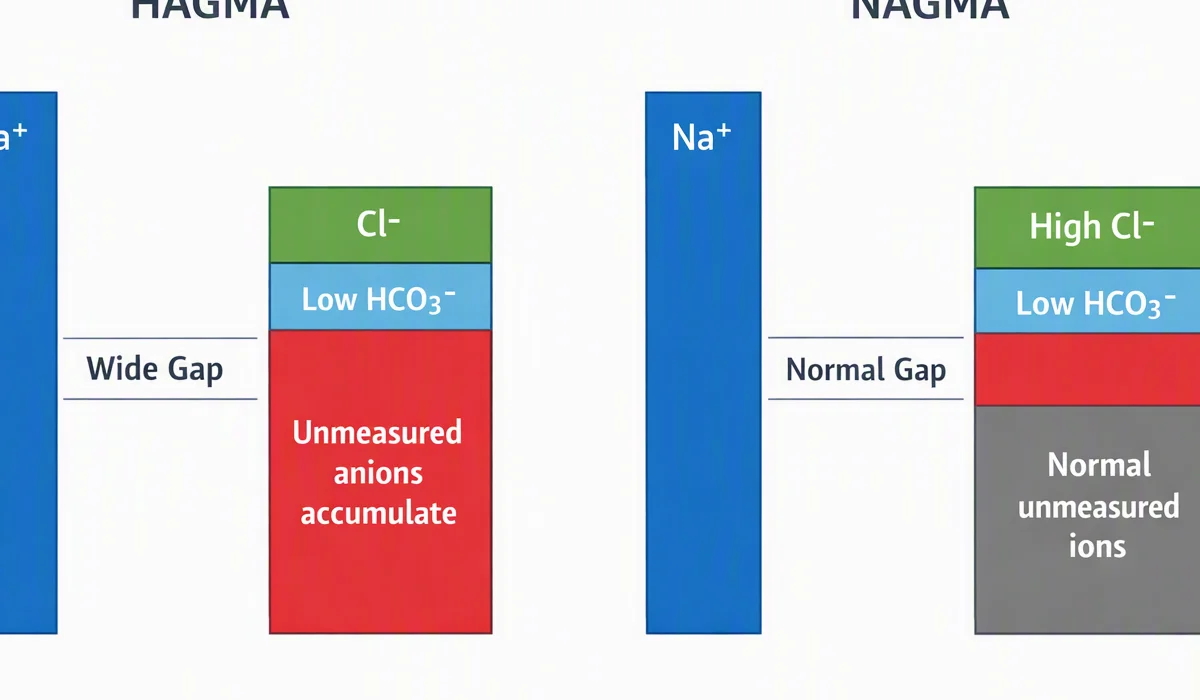
In practice, the anion gap calculator is valuable because it simplifies the interpretation of a routine blood chemistry panel. The calculator does not replace judgment; it organizes the data so patterns become easier to identify.
How Serum Sodium Affects the Calculation
Serum sodium is central to the process because it grounds the formula. Since sodium is the most abundant measured cation in the blood, any change in its concentration can alter the anion gap result. That does not mean sodium directly triggers the acid-base problem, but it can shape the final number and how the electrolyte balance is interpreted.
If sodium is low or high, the relationship between sodium, chloride, and bicarbonate shifts. The resulting lab result may still be informative, but the context matters. For example, a low sodium value can make the calculated gap less clear to interpret if the rest of the electrolytes are altered at the same time.
Albumin also plays a role here. Because albumin is a negatively charged protein, lower albumin can make the anion gap appear lower than it truly is. This is why albumin correction is sometimes used to estimate a corrected anion gap. In a patient with hypoalbuminemia, the unadjusted number may miss the degree of underlying acid-base abnormality.
The corrected result is not a separate diagnosis. Rather, it is a correction factor applied to improve interpretation. This is especially important when the goal is to evaluate a hidden cause of metabolic acidosis or to detect a subtle change in serum chemistry.
Typical, High, and Decreased Anion Gap Results
The normal range for the anion gap depends on the laboratory method and whether potassium is included. That said, the result is usually categorized as anion gap within normal limits, increased anion gap, or reduced anion gap.
A anion gap within normal limits often suggests that the measured electrolytes are in equilibrium in a standard way, though it does not automatically mean there is identifying HAGMA causes no problem. A increased anion gap metabolic acidosis usually points to the presence of extra acids or unmeasured ions in the blood. A reduced anion gap is less common and may reflect low albumin, lab variation, or other issues that affect the measurement.
It is important to remember that “normal” is lab-specific. A result that seems borderline in one setting may be acceptable in another. This is why a full clinical review should consider the specific blood chemistry panel, the patient’s symptoms, and the broader pH balance.
In practical terms:
- Normal gap: may be seen when the electrolyte pattern does not suggest excess unmeasured acids.
- High anion gap metabolic acidosis: suggests extra acid accumulation or another process increasing the gap.
- Decreased anion gap: may indicate hypoalbuminemia, lab variation, or a less common abnormality.
Frequent Causes of Atypical Anion Gap Values
A number of conditions can affect the anion gap and indicate a specific cause of metabolic acidosis. The most frequent causes are lactic acidosis, ketoacidosis, renal failure, and hypoalbuminemia.
Lactic acidosis occurs when lactate builds up faster than the body can clear it. This can occur with low oxygen delivery, severe illness, or other metabolic stress. Since lactate is an unmeasured anion, the gap may rise.
Ketoacidosis can develop when ketones accumulate, including in uncontrolled diabetes or prolonged fasting. These ketones raise the level of unmeasured acids, often leading to high anion gap metabolic acidosis.
Renal failure can reduce the body’s ability to eliminate acids. As acid retention increases, the anion gap may become elevated. This finding can be particularly useful when paired with the rest of the electrolytes and kidney-related markers on the blood chemistry panel.
Hypoalbuminemia, on the other hand, may lower the measured gap. Because albumin contributes to the negative charge balance, low albumin can make the result appear deceptively normal or reduced. That is where albumin correction and the corrected anion gap become useful in clinical interpretation.
Other causes can exist too, but these four are among the most commonly reviewed when reviewing an elevated or reduced anion gap.
Step by Step: Reading Calculator Output
Interpreting an anion gap calculator output is more than typing in numbers and reading a anion gap in chronic kidney disease result. A systematic process enhances assessment and helps avoid mistakes.
Step 1: Review the electrolyte values. Check the serum sodium, chloride, and bicarbonate values from the electrolyte panel or blood chemistry panel. Ensure the units and sample are correct.
Step 2: Calculate the anion gap. Use the anion gap formula to obtain the calculated value. Evaluate it with the lab’s reference range rather than assuming a universal cutoff.
Step 3: Consider albumin. If albumin is low, apply albumin correction to estimate the corrected anion gap. This may reveal a hidden elevation that would otherwise be missed.
Step 4: Match the pattern to the clinical picture. Identify signs of acid-base disorder, dehydration, kidney dysfunction, or other causes of metabolic disturbance. The result should fit the patient’s symptoms and other lab findings.
Step 5: Form a clinical interpretation. A single number is not enough. Synthesize the anion gap with the rest of the serum chemistry, the history, and the physical findings to make a reasonable conclusion.
A useful anion gap result is one that matches the full story, not one that stands alone.
Constraints of Anion Gap Calculation
Although the anion gap is useful, it has clear limits in diagnosis. The calculation depends on measurement methods, lab handling, and the context in which the result is used.
One limitation is albumin adjustment. When albumin is not considered, the result may confuse the interpreter. This is especially relevant in patients with hypoalbuminemia, where the measured gap can be incorrectly low or normal.
Another limitation is laboratory variation. Different analyzers and reporting methods can produce slightly different reference intervals. A number that seems abnormal in one lab may land in a different lab’s expected reference range.
The calculation also does not directly identify the cause of the problem. It simply points to the possible presence of unmeasured substances or a shifted electrolyte pattern. Additional testing and context are needed to confirm the cause, whether that is lactic acidosis, ketone-related acidosis, renal insufficiency, or something else.
Finally, the anion gap should not be used as a substitute for direct clinical care. It is best viewed as one part of a broader diagnostic approach to pH balance and clinical interpretation.
When to Seek Medical Review
Abnormal anion gap findings should be reviewed by a clinician, especially when they occur with concerning complaints. Signs such as severe weakness, rapid breathing, confusion, vomiting, chest discomfort, or worsening illness may signal a serious metabolic acid buildup or another urgent condition.
An elevated or reduced result does not always mean emergency care is needed, but it does mean the test should be understood in context. If a blood test panel shows a concerning pattern, prompt urgent evaluation may be appropriate to assess the underlying cause.
Patients with diabetes, kidney disease, infection, dehydration, or known electrolyte disorders may need careful evaluation if the anion gap is abnormal. The same is true if the result varies greatly from prior testing or doesn’t fit the patient’s clinical status.
If unsure, follow up with a clinician who can assess the result alongside symptoms, exam findings, and other laboratory data.
FAQs About Anion Gap and Serum Sodium
What is an anion gap calculator with serum sodium used for?
An anion gap calculator with serum sodium is used to estimate the anion gap from common electrolytes on a blood chemistry panel. It assists with clinical evaluation of acid-base problems, especially when evaluating metabolic acidosis or checking for a hidden metabolic issue.
How do you calculate the anion gap from sodium, chloride, and bicarbonate?
Use the anion gap calculation: sodium - (chloride + bicarbonate). The sodium level, chloride concentration, and bicarbonate value are entered into the calculator to produce the computed result.
Why does serum sodium matter in an anion gap calculation?
Serum sodium matters because it is the main measured cation in the formula. Changes in sodium can affect the final number and the way the acid-base balance is interpreted. Sodium also helps anchor the relationship between the measured electrolytes and the overall charge balance.
What does a high anion gap mean?
A increased anion gap often suggests extra acids or unmeasured ions in the blood. Common causes include lactic acidosis, ketoacidosis, and renal failure. It can be a clue to high anion gap metabolic acidosis, but the full clinical picture is needed for interpretation.
Can a standard anion gap actually indicate a clinical issue?
Yes. A normal anion gap doesn't eliminate illness or an pH balance problem. Some cases may not change the gap much, and laboratory result analysis must factor in symptoms, other labs, and the patient’s overall condition. Medical interpretation should always look past the number alone.